A container herb garden can live on a sunny balcony, a courtyard or a well-positioned doorstep. The best first choices aren't necessarily the most unusual plants in the nursery. They are the herbs you regularly use, grown in a place with enough light and easy access to water. Begin small and learn the conditions before filling the space.
Begin with the spot
Watch how much direct sunlight reaches your proposed location. Many culinary herbs—including rosemary, thyme and basil—need good light, but their tolerance for heat and moisture differs. A hot exposed balcony can be much tougher than a sheltered courtyard. Check apartment rules, load limits and whether water can drain without running onto neighbours below.
Choose a short shopping list
Choose two or three herbs you genuinely use in meals. Basil can be productive in warm conditions, while rosemary and thyme often prefer freer-draining conditions and less frequent watering. Mint can spread vigorously, so a separate pot is easier to manage. Your local nursery can help match varieties to your climate and the time of year; Australia doesn't have one universal planting calendar.
Give roots room and a way out
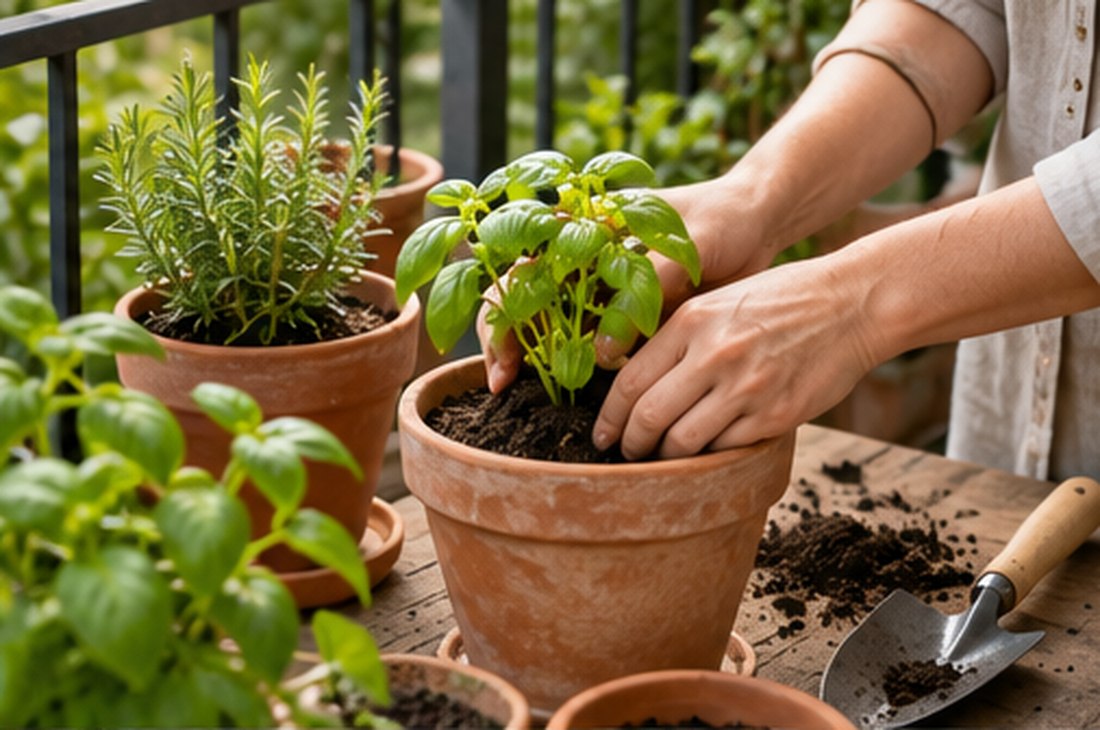
Use pots with holes and quality potting mix suitable for containers. A decorative saucer may protect flooring, but empty standing water as appropriate rather than letting the pot remain saturated. Larger containers can buffer moisture changes better than tiny ones, though they are heavier. If you're renting or gardening on a balcony, check safe placement and drainage before buying a row of pots.
Water by need, then harvest gently
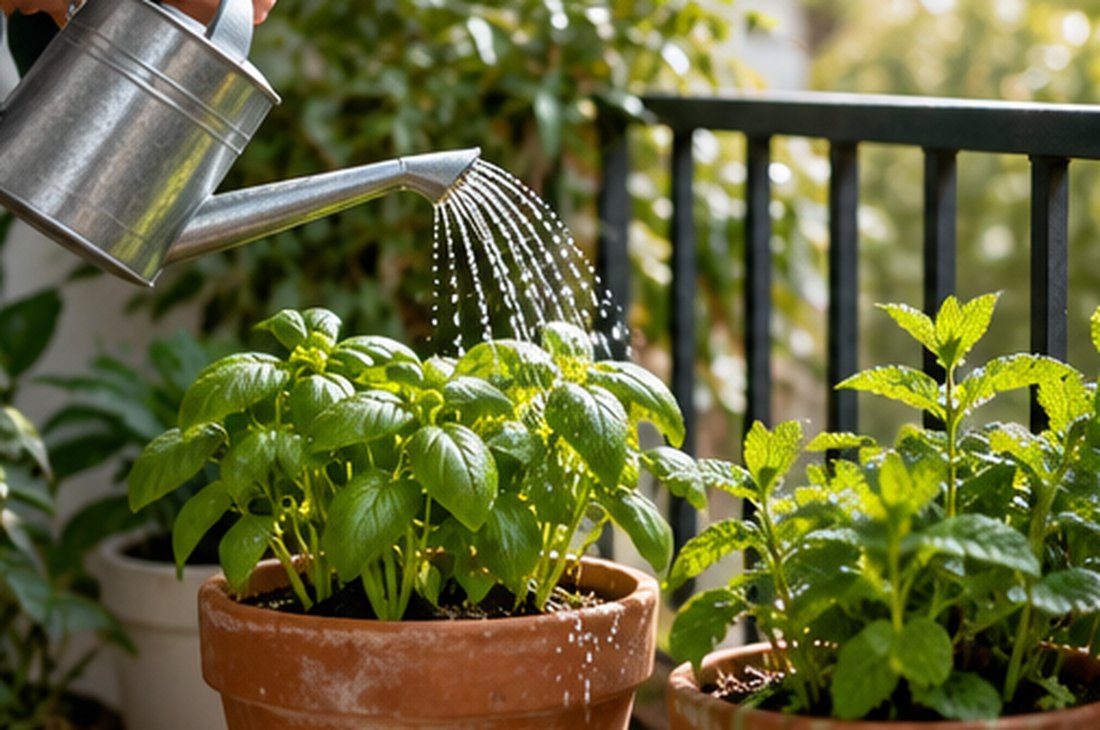
Check below the surface instead of applying the same amount of water to every plant on a fixed schedule. Regularly taking a little growth from established plants can encourage a useful shape, but avoid stripping a small seedling. Keep tools clean and wash edible herbs before cooking. If pest or disease problems appear, choose treatment options explicitly suitable for food crops.
Make it easy to reach
A pot you can see from the kitchen is more likely to be checked and used than one hidden in a hard-to-access corner. Keep a small watering can nearby and label the plants if you are learning to recognise them. Once the first pots settle in, you can decide whether more varieties would genuinely improve your cooking. There is no reason to buy an entire herb wall on day one.
Conditions, products and homes vary. This article is general information, not a substitute for professional advice about structural, electrical, plumbing, health, or specialist horticultural issues. Follow product instructions and local rules where relevant.