Cleaning advice often begins with a long product list. In reality, a small selection of suitable supplies can cover many ordinary household tasks. The important choices are matching products to surfaces, following labels and keeping chemicals stored securely. A tidy caddy is only helpful if it makes the process safer and simpler.
Start with the surfaces you actually have
List the materials in your kitchen, bathroom and living spaces. Stone benchtops, timber, stainless steel and painted surfaces may require different care. Check manufacturer instructions before introducing a strong product or abrasive scrubber. Water and a suitable microfibre cloth may be enough for some everyday dusting jobs, while other tasks need a specifically labelled cleaner.
Keep tools straightforward
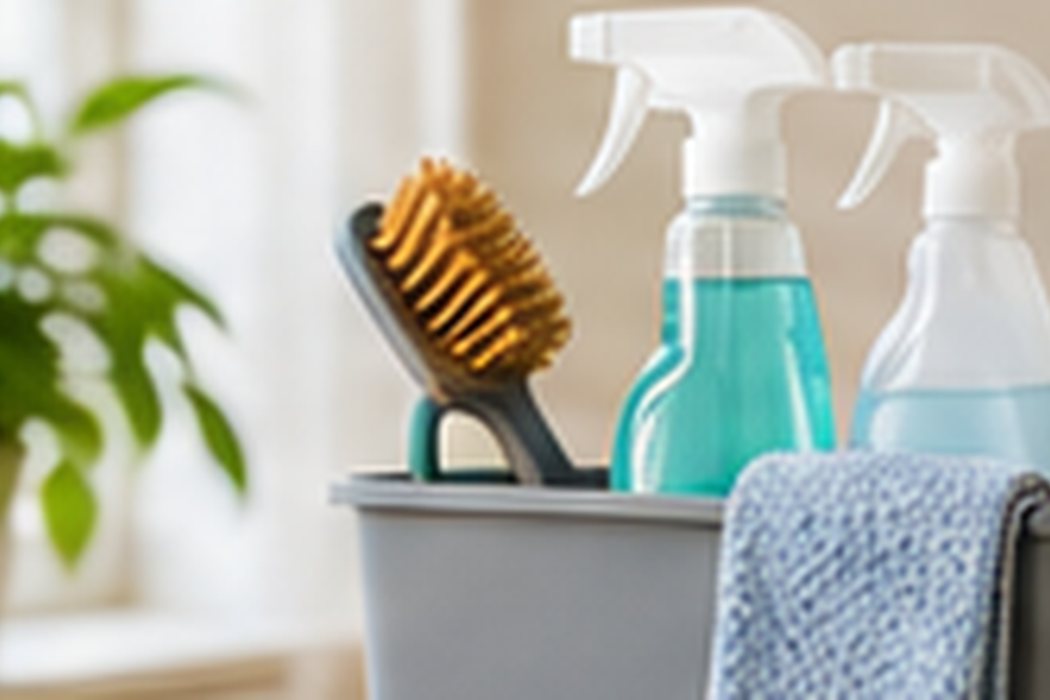
Useful basics may include washable cloths, a soft brush, gloves appropriate to the product and a non-scratch sponge. Separate bathroom cleaning items from food-preparation surfaces, and wash or replace cloths as needed. Don't store damp cloths in a tightly closed caddy for days. A small kit that dries properly is more useful than a crowded box of products you never reach for.
Read labels every time you change products
Never mix household cleaning chemicals, especially bleach with acids or ammonia-containing products, because dangerous gases can form. Follow dilution, ventilation, protective-equipment and surface-suitability instructions. Avoid transferring chemicals into unlabelled bottles or food containers. 'Natural' and 'homemade' do not automatically mean safer, and internet recipes can create hazards when ingredients are combined.
Store the caddy securely
Keep cleaning supplies out of children's and pets' reach, ideally in locked storage as appropriate. Do not leave an open caddy unattended during cleaning. If a product causes irritation, stop using it and follow label or medical advice; contact relevant poisons information services for suspected exposure. Dispose of empty packaging and unused chemicals according to local guidance.
Make a small, repeatable route
Begin with visible mess, then wipe relevant surfaces with a suitable product and finish by cleaning tools and putting them away. Don't try to deep-clean an entire house in one session. A clear route around two or three frequently used areas can make upkeep more manageable and lets you notice when a task really needs specialist attention.
Conditions, products and homes vary. This article is general information, not a substitute for professional advice about structural, electrical, plumbing, health, or specialist horticultural issues. Follow product instructions and local rules where relevant.